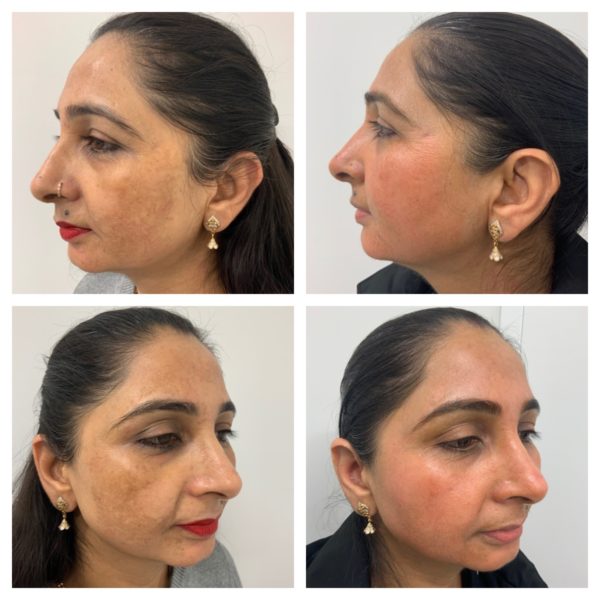
Understanding Hyperpigmentation and Why It Happens
Hyperpigmentation is a common skin condition where certain areas of the skin become darker than the surrounding skin. This happens when the body produces too much melanin, the pigment responsible for skin color. Sun exposure, acne scars, hormonal changes, and inflammation are some of the most common triggers.
In simple terms, your skin has pigment-producing cells called melanocytes. When these cells become overactive, they create uneven patches of color. This is where modern dermatology steps in, especially with advanced Laser Treatments for Hyperpigmentation, which aim to target and correct these irregular pigment clusters.
How Laser Technology Targets Pigment in the Skin
To understand Laser Treatments for Hyperpigmentation, it helps to know how lasers interact with the skin. A laser is a focused beam of light with a specific wavelength. Different wavelengths penetrate the skin at different depths.
When treating pigmentation, the laser is designed to target melanin without damaging surrounding tissue. The light energy is absorbed by the dark pigment, causing it to break into tiny particles. Over time, the body naturally removes these particles through its immune system.
This process is why Laser Treatments for Hyperpigmentation are considered highly precise compared to topical creams or chemical treatments.
The Science of Selective Photothermolysis
The core principle behind Laser Treatments for Hyperpigmentation is something called selective photothermolysis. Although the term sounds complex, it simply means using light to selectively destroy pigment without harming nearby skin.
Here’s how it works:
The laser emits a specific wavelength of light.
Melanin absorbs this light more than surrounding skin structures.
The absorbed energy converts into heat.
The heat breaks down excess pigment.
This controlled damage triggers the skin’s natural healing response. As the skin repairs itself, the pigmented areas gradually fade, resulting in a more even skin tone.
Different Types of Lasers Used for Pigmentation
Not all lasers are the same. Dermatologists choose different types depending on the depth and severity of pigmentation.
Q-switched lasers are commonly used in Laser Treatments for Hyperpigmentation because they deliver short bursts of high energy that effectively break down pigment.
Fractional lasers work by creating microscopic treatment zones in the skin, encouraging new, healthy skin to replace pigmented areas.
Picosecond lasers are a newer advancement. They use ultra-short pulses to shatter pigment particles more efficiently, often requiring fewer sessions.
Each of these technologies plays a role in making Laser Treatments for Hyperpigmentation adaptable to different skin types and conditions.
What Happens in the Skin After Laser Treatment
After a session of Laser Treatments for Hyperpigmentation, the skin goes through several biological changes. Immediately, the treated area may appear slightly red or darkened. This is a normal reaction known as pigment “micro-crusting.”
Over the next few days to weeks, the body’s immune system begins clearing away the fragmented melanin. Macrophages, which are specialized immune cells, help remove these pigment particles naturally.
At the same time, collagen production is often stimulated, improving overall skin texture. This is why many people notice not only reduced pigmentation but also smoother and healthier-looking skin after completing Laser Treatments for Hyperpigmentation.
Why Laser Treatments Are More Precise Than Other Methods
Traditional treatments for pigmentation include creams, peels, and natural remedies. While these can help in mild cases, they often work slowly and inconsistently.
Laser Treatments for Hyperpigmentation stand out because they directly target melanin deposits beneath the skin’s surface. Instead of affecting the entire skin layer, lasers focus only on the unwanted pigment.
This precision reduces the risk of damage to surrounding skin and allows dermatologists to treat even stubborn or deep pigmentation more effectively.
Factors That Influence Treatment Results
The effectiveness of Laser Treatments for Hyperpigmentation depends on several factors.
Skin type plays a major role. People with lighter skin tones may respond more quickly, while darker skin tones require more careful calibration to avoid side effects.
The depth of pigmentation also matters. Surface-level pigmentation like sunspots typically responds faster than deeper dermal pigmentation caused by conditions like melasma.
Lifestyle factors such as sun exposure and skincare routine also influence results. Without proper sun protection, new pigmentation can form even after successful Laser Treatments for Hyperpigmentation.
Safety and Skin Healing Process
Modern Laser Treatments for Hyperpigmentation are designed with safety in mind. However, the skin still undergoes controlled stress during the process.
After treatment, the skin barrier becomes temporarily sensitive. Dermatologists usually recommend gentle skincare, sunscreen, and avoiding direct sun exposure during the healing phase.
Healing typically occurs in stages. First, inflammation reduces within a few days. Then pigmentation gradually fades over several weeks. Full results from Laser Treatments for Hyperpigmentation may take multiple sessions depending on severity.
Benefits Beyond Pigmentation Removal
While the primary goal of Laser Treatments for Hyperpigmentation is to reduce dark spots, there are additional benefits.
Many patients experience improved skin texture due to increased collagen production. Fine lines may become less visible, and overall skin tone becomes more uniform.
Another benefit is long-term improvement. With proper maintenance and sun protection, results from Laser Treatments for Hyperpigmentation can last for years.
Limitations and Realistic Expectations
Even though Laser Treatments for Hyperpigmentation are highly effective, they are not an instant cure. Multiple sessions are often required, especially for deep or stubborn pigmentation.
Some cases of melasma, for example, may return if hormonal triggers are not managed. This is why dermatologists often combine Laser Treatments for Hyperpigmentation with topical treatments and lifestyle guidance for best results.
Temporary side effects like redness, swelling, or mild peeling are also common but usually resolve quickly.
The Future of Laser Technology in Skin Treatment
Advancements in dermatology are continuously improving Laser Treatments for Hyperpigmentation. Newer laser systems are becoming more precise, faster, and safer for a wider range of skin tones.
Researchers are also exploring combination therapies where lasers are paired with light-based or topical treatments for enhanced results. Artificial intelligence is even being used in some clinics to customize Laser Treatments for Hyperpigmentation based on individual skin analysis.
These innovations suggest that future treatments will be even more effective and personalized.
Conclusion: A Scientific Yet Simple Solution for Clearer Skin
Hyperpigmentation can be frustrating, but modern dermatology offers powerful solutions. Laser Treatments for Hyperpigmentation work by using precise light energy to break down excess melanin, allowing the body to naturally clear it away.
By understanding the science behind how lasers interact with skin cells, it becomes clear why this technology is so effective. It combines physics, biology, and medical innovation into a targeted treatment that delivers visible results.
With proper care, realistic expectations, and professional guidance, Laser Treatments for Hyperpigmentation can be a highly effective way to achieve clearer, more even-toned skin.